Liver and tuna digests for kibble palatants: choosing the protease system
Kibble that pets leave in the bowl is a commercial problem for the brand, and pet food buyers now judge palatability alongside basic nutrition. Palatant makers and kibble plants use enzyme digestion of animal raw material to build the flavor base that later goes on the kibble. Kibblewright supplies protease systems for this step to palatant producers, pet food manufacturers and resellers; send the raw material, the volume and the destination through the request a quote form.
How a liver digest becomes a palatant
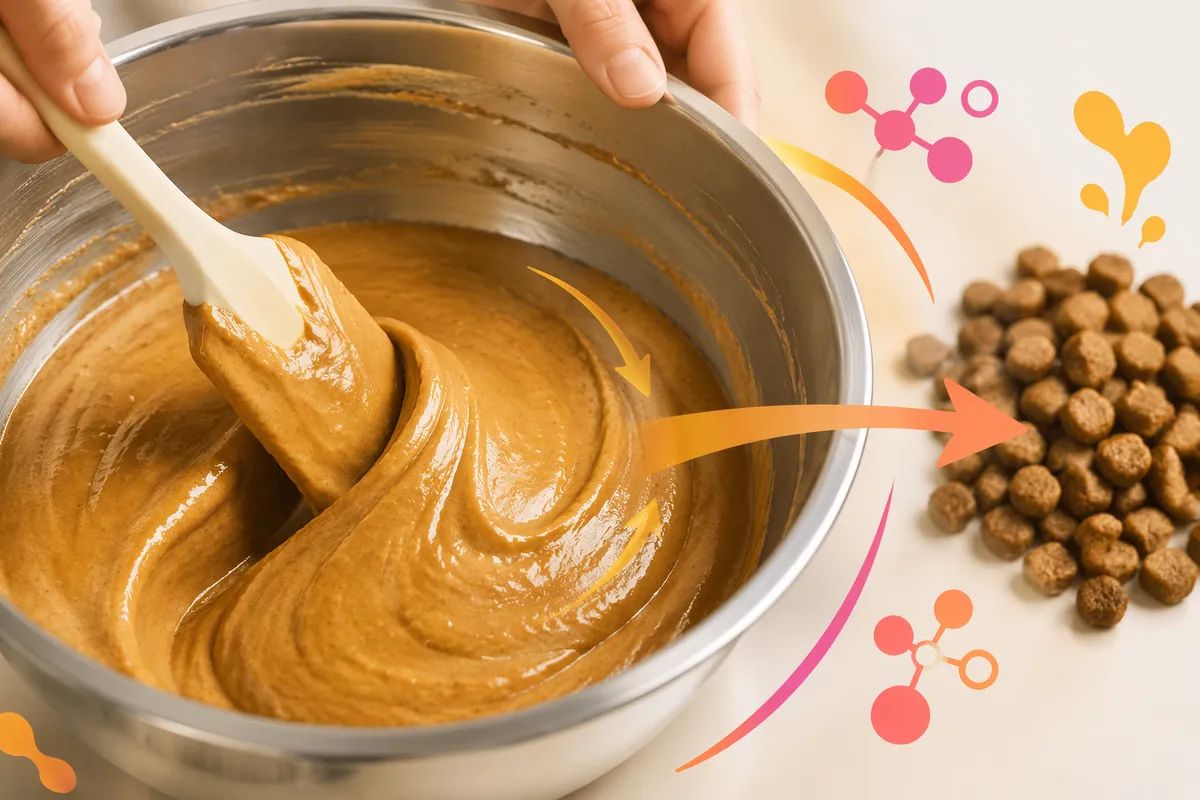
- Chicken liver is digested with an offal protease together with a flavor protease, at a suitable temperature for a set time.
- Amino acids, vitamins, yeast extract and sugars are then added to the digest.
- The mix goes through a Maillard heat reaction and further processing, giving a palatant with a clean, mild meaty aroma that lasts.
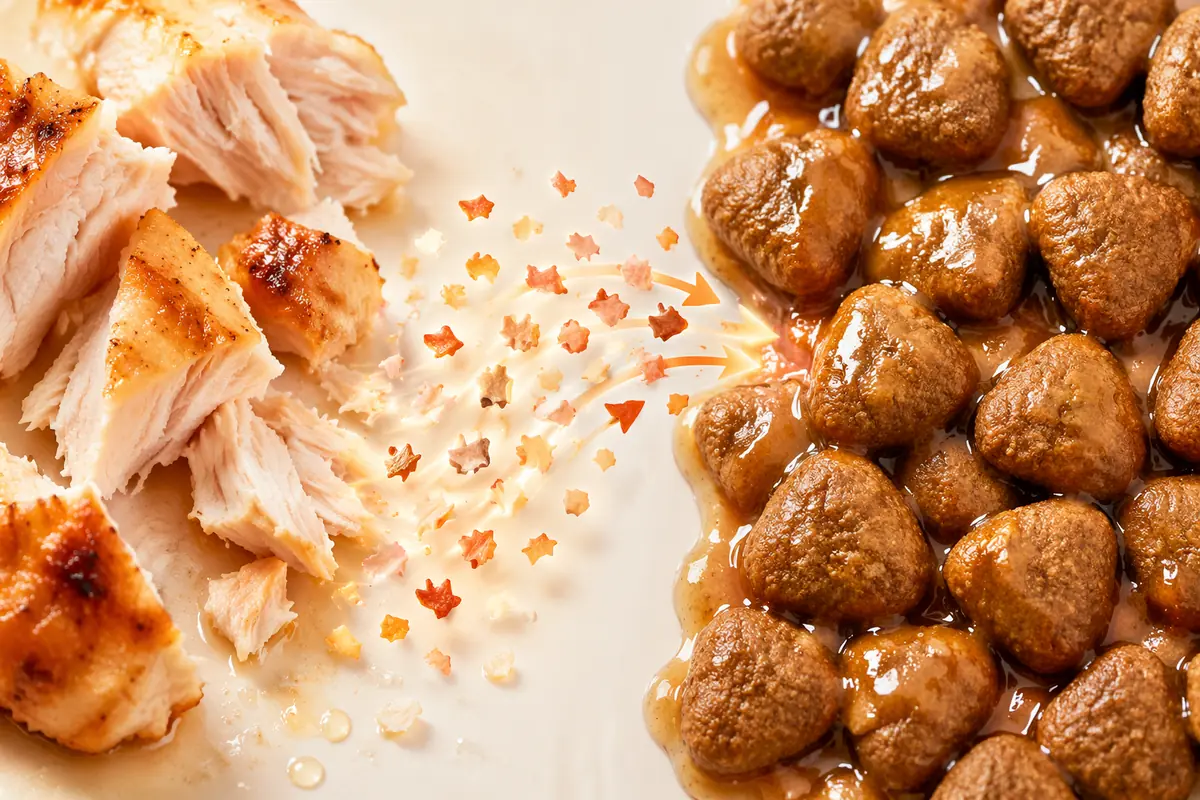
What the enzyme step changes for the plant
- The liver protein breaks down quickly, so the material is easier to handle in the line.
- The typical liver character is kept and the meaty note stays full.
- The finished palatant has a stronger aroma with a longer finish that blends well with the rest of the coating.
- Fast hydrolysis supplies more flavor precursors, and the hydrolysate suits pets' taste better.
Tuna as a second raw material
Chicken liver is one of the main palatant raw materials, but liver alone no longer covers demand, so tuna has become another choice. Tuna is rich in protein, unsaturated fatty acids and vitamins, and its protein is easier to digest once hydrolyzed. Enzymes commonly used for tuna digests are papain, alkaline protease, neutral protease, a seafood-hydrolysis protease and a flavor protease.
Why the enzyme choice decides the flavor
Each protease cuts protein at different sites, so the degree of hydrolysis differs from one enzyme to the next. That changes the mix of amino acids, peptides and other flavor precursors, so each digest smells different. After the Maillard step the aroma differs again, and so does the finished palatant, which is why enzyme choice is central to aroma, palatability and flavor.
| Raw material | Enzymes used for the digest | What the buyer compares |
|---|---|---|
| Chicken liver | Offal protease with a flavor protease | Handling of the liver, kept liver character, aroma strength and finish |
| Tuna | Papain, alkaline, neutral, seafood-hydrolysis or flavor protease | Degree of hydrolysis and the aroma after the Maillard step |
Common mistakes in a palatant digest trial
- Treating every protease as interchangeable: different cutting sites give a different degree of hydrolysis and a different aroma.
- Judging the digest before the Maillard step: the aroma changes again after heating, so compare finished palatants.
- Running liver with one enzyme only, when the usual liver route pairs an offal protease with a flavor protease.
- Switching from liver to tuna without choosing the enzyme again, since the enzyme changes the flavor precursors you get.
Request a quote
Wholesale and bulk supply for palatant producers, pet food manufacturers and resellers: tell us the raw material (liver, other offal, tuna or another protein), the enzymes you use now, your batch size and monthly volume, and the destination country. Price, pack format and lead time are quoted per order. Request a quote